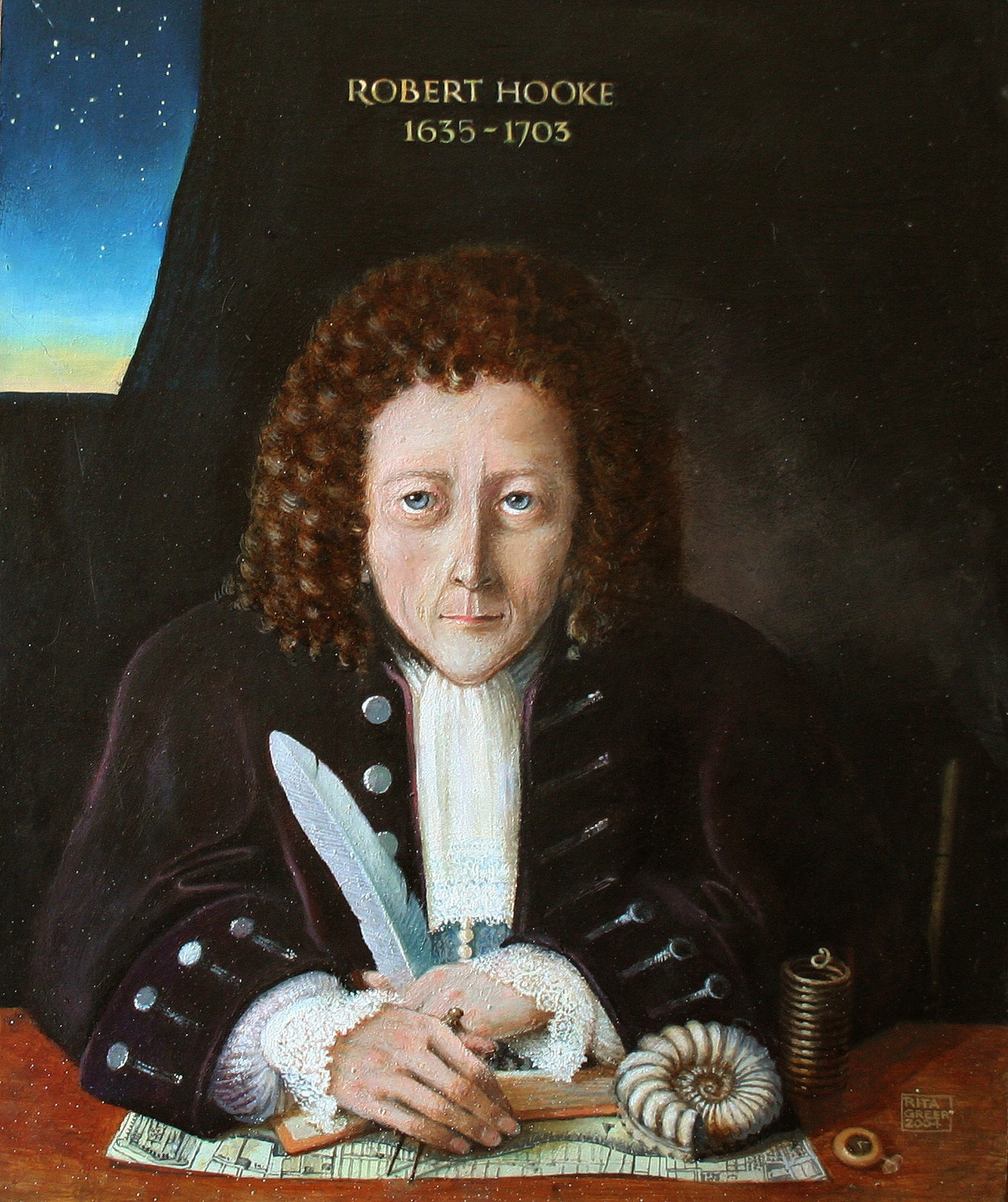
Robert Hooke (1635-1703) was a renowned English scientist, best known for his groundbreaking work in physics, biology, and architecture. He is often referred to as the "father of microscopy" for his contributions to the development of the microscope. Hooke's most notable publication, "Micrographia" (1665), showcased his detailed observations of various organisms and objects under the microscope. He also formulated Hooke's Law in physics, which describes the relationship between the force applied to an elastic object and the resulting deformation. In addition to his scientific pursuits, Hooke was a skilled architect and designed notable buildings in London, including the Monument to the Great Fire of London. His wide-ranging interests and innovative discoveries have left a lasting impact on the fields of science and architecture.
 Rate Famous People